
Beneath the AI power surge: case studies of the energy transition fuelling it.

AI’s global share of venture capital has skyrocketed in 2025. According to CB insights, funding to AI startups hit $47.3 billion in H1, that’s 52% of VC funding worldwide. But while AI’s hogging all the headlines and attention (and sparks bubble debates), a quieter revolution is unfolding beneath the surface… According to Bloomberg, clean technology companies that have inked deals to support data centers have seen their stocks soar this year, outperforming the S&P 500. Meaning AI’s appetite for electricity is transforming the energy landscape.
The energy sector reawakens
For decades, energy demand in the U.S and Europe was flat. That era has now ended. AI, alongside EVs, heat pumps, air conditioning, industrial electrification and more, are all adding to the load. Training large language models and operating advanced data centers requires massive and continuous power.
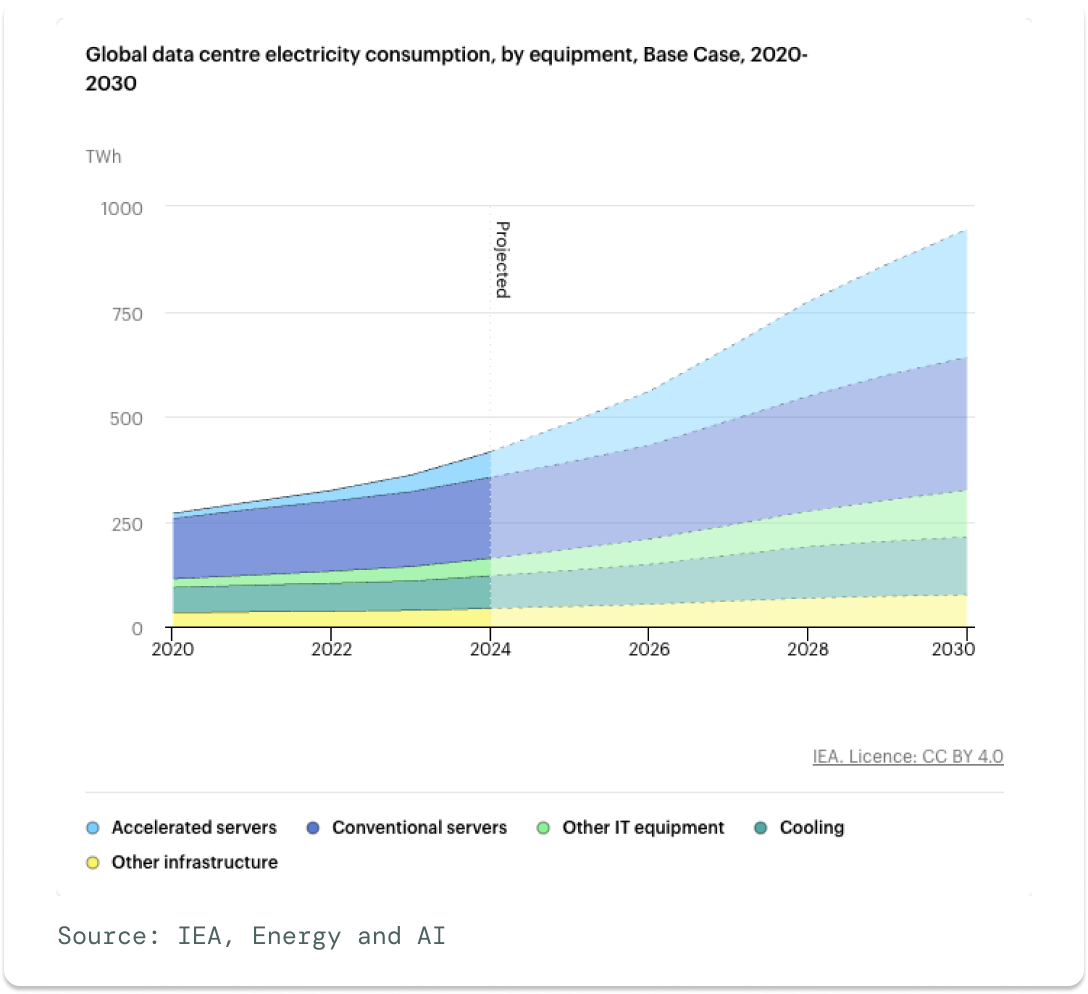
IEA’s forecast shows that electricity use from data centers is expected to double by 2030, reaching about 945 terawatt-hours (TWh). Moreover, from 2024 to 2030, data center electricity use is set to grow about 15% each year. That’s over 4x faster than electricity use in other sectors.
Still, it’s important to remember that even with this rapid growth, data centers will only make up a small share (3%) of all electricity use worldwide.
AI isn’t creating the electricity challenge (EVs, heat pumps, air conditioning, industrial electrification and more are all adding to the load anyway); it’s revealing and exacerbating it. AI and electrification are essentially injecting new momentum in a sector that hadn’t seen real growth or innovation in decades and igniting long-overdue conversations about how to build energy systems that can keep pace.
The grid under pressure
AI’s rapid build-out of new energy infrastructure is stress-testing the grid and exposing how underinvested and inflexible our current power systems are. When tech giants move their data centers into a new market, they can soak up gigawatts of power capacity, leaving utilities and grid operators scrambling to expand infrastructure quickly enough to prevent blackouts. The build-out is pushing up local electricity prices in regions near data center hot spots. Like Baltimore in the U.S, where Bloomberg recently reported up to 125% increase in wholesale electricity prices over 5 years.
This is sparking public frustration and putting pressure on hyperscalers to become more resource-efficient and flexible in how and when they use electricity. It is also forcing utilities to find ways to get more energy out of existing assets, for example, through greater energy efficiency and virtual power plants, to avoid the need for new and expensive fossil infrastructure.
Energy becomes the new tech frontier
This pressure, in combination with renewables now being both cheaper and faster to build than fossil fuel infrastructure (speed to power is the most important metric for datacenter developers), has become a catalyst for clean energy technologies and grid software. We are seeing hyperscalers such as Google, Amazon, and Microsoft, parties with enormous financial resources, now actively investing in the energy sector (and beyond).
Together with their data center developers, they are investing in both proven and next-generation clean technologies to power their operations and create more flexible energy systems. For example, by committing to long-term offtake agreements, they are helping to reduce the risk for early-stage innovations that might otherwise struggle to scale, sending a powerful signal of trust to the broader market.
We see this across our portfolio too:
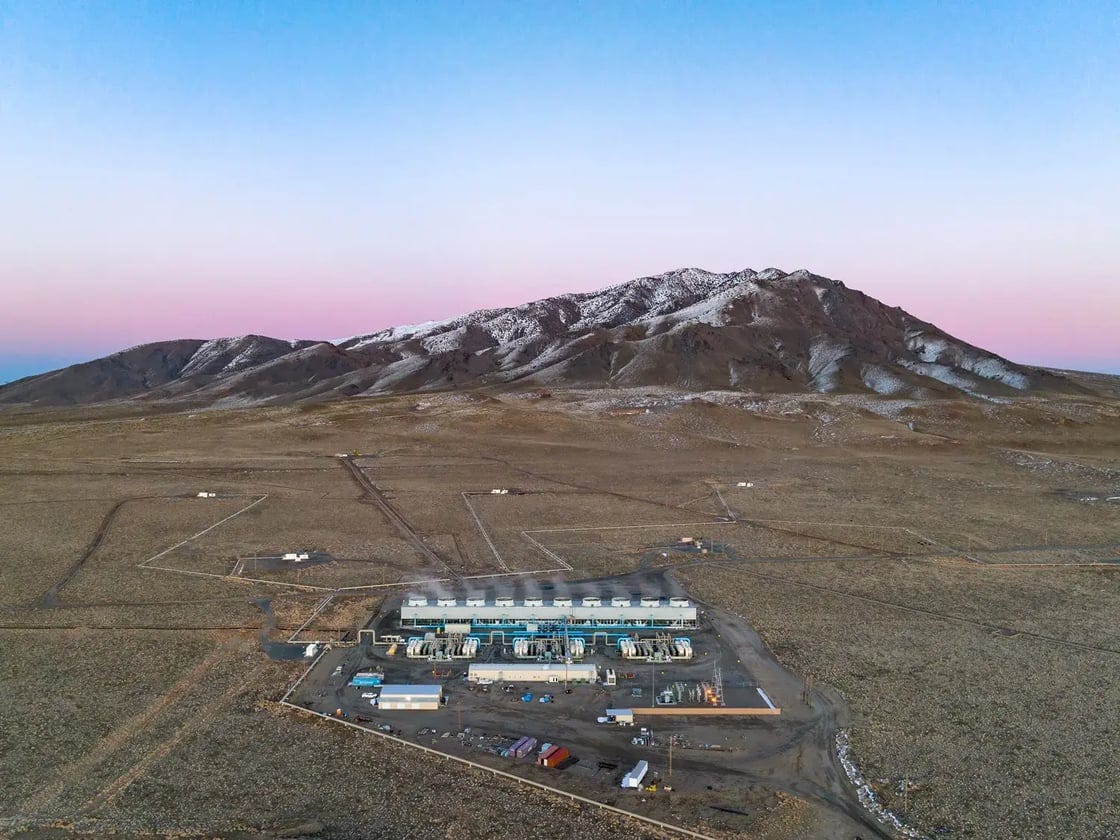
- 🌋 Google partnered with Fervo Energy, over 4 years ago already, to bring online a “first-of-its-kind” enhanced geothermal power project in Nevada that is now supplying carbon-free electricity to the local grid that serves Google’s data centers. Their partnership offered a roadmap and template for how corporates and utilities can collaborate (via new structures like the “Clean Transition Tariff”) to accelerate deployment of advanced clean technologies.
- 🌋 Meta announced a 150 MW next-generation geothermal partnership with XGS Energy in Mexico. This partnership enables XGS to deliver its first large-scale project, serving as proof of concept while reducing technology, permitting and financing risks for future projects. Few companies are willing to take on this first-of-a-kind risk, which makes the partnership particularly valuable..
- ⚡️ Amazon is an investor in Mainspring, backing flexible microgrid generators that can run on renewable fuels (critical for grid resilience). The generator can switch among biogas, hydrogen, or ammonia (and potentially other low- or zero-carbon fuels) without major hardware changes. That flexibility mitigates the risk of technology lock-in.
- ☢️ Equinix (global data center developer and operator) signed deals with Radiant Industries and pre-ordered 20 units of compact nuclear micro-reactors for its global data-center footprint. Recently, Radiant has announced plans to build a dedicated factory in Oak Ridge, Tennessee (on a historic Manhattan Project site) that will mass-produce its “Kaleidos” micro-reactors. Construction is slated to begin in early 2026.
These are not isolated bets; they reflect a new playbook where digital infrastructure and clean energy can co-evolve. By anchoring demand for new technologies, hyperscalers can help underwrite the next wave of the energy transition. In return, they reap the long-term benefits of energy security, cost stability, and faster permitting for new sites.
The ripple effect: beyond electrons
AI’s infrastructure build-out is also affecting industries beyond electricity. Every computing decision (from chip design to server cooling) creates cascading effects across materials, manufacturing, and supply chains. It is driving decarbonization across sectors considered hard to abate, including steel and cement. By securing low-carbon materials early, companies lock in scarce supply, hedge against future carbon costs, and streamline regulatory approvals, especially in Europe, where sustainability performance is tightly linked to site access and permitting speed.
Again, this is reflected in our portfolio:
- 🧱 Sublime Systems signed a binding, long-term purchase agreement with Microsoft for ~622,500 metric tons of clean cement. An interesting component: Microsoft will have the priority option to purchase not only the physical low-carbon cement material but also the environmental attribute certificates (EACs) tied to that material (separate from the concrete itself), using a “book & claim” model to decouple the geography of supply from usage. The use of EACs for cement is similar to how clean energy credits work in the power sector. This mechanism can help overcome geographic or logistical constraints and create a new market structure in heavy materials.
- ⚙️ Hyperlume builds microLED-based optical interconnects that help data-centers gain efficiency across the entire energy stack and thus reduce power consumption. Hyperlume just had a successful exit to Credo. Often, when we think of clean energy, we focus on generation. But the demand side efficiency is equally crucial. By improving the way data is moved and processed, we can limit the enormous energy needs of AI.
- ♻️ Crusoe and Redwood Materials are partnering to close the loop on energy storage and address supply chain bottlenecks. Together, they will deploy a large-scale micro-grid using second-life EV batteries to power modular AI data-centers. The installation (12 MW solar + 63 MWh of repurposed EV batteries) at Redwood’s campus in Nevada is the largest second-life battery deployment in North America and powers Crusoe’s “Crusoe Spark” modular AI data-center units.
Together, these examples show how AI’s growth is accelerating decarbonization far beyond energy generation and pushing for rethinking efficiency, repurposing resources, and reshaping material flows.
The road ahead
Whether the AI boom continues or not, one thing is certain: the world will need far more clean electricity and better grid infrastructure to electrify our economy. The rapid growth of AI is now bringing many ideas that were long at the margins of the power sector back to the forefront. Distributed energy resources, grid flexibility, long-duration energy storage, geothermal energy, nuclear and even new approaches to market design are now seen as central to the future of the energy system.
In many ways, the datacenter buildout and financial firepower of hyperscalers has acted as a catalyst for commercializing innovations in the energy sector, accelerating conversations and investments in climate technologies that had long been overdue.
🗞️ Carbon Equity Update
🚨 Our Access to Climate Tech Fund II is nearing its close on October 31, 2025. This means you have 4 days left to reserve your investment and put your capital to work straight away.

To date, we’ve welcomed over 180 investors and raised more than €5 million for the Access to Climate Tech Fund II. The fund is off to a strong start, with investments in 4 leading climate funds (Gilde Climate Solutions I, Infragreen V, Forbion BioEconomy Fund I, 2150 Urban Technology Fund I) backing real solutions for a cleaner, smarter future.
Log in or create an account to learn more about the investment opportunity 🔗👇
𝘛𝘩𝘪𝘴 𝘪𝘴 𝘢 𝘮𝘢𝘳𝘬𝘦𝘵𝘪𝘯𝘨 𝘤𝘰𝘮𝘮𝘶𝘯𝘪𝘤𝘢𝘵𝘪𝘰𝘯. 𝘊𝘢𝘳𝘣𝘰𝘯 𝘌𝘲𝘶𝘪𝘵𝘺 𝘪𝘴 𝘢 𝘧𝘶𝘯𝘥 𝘮𝘢𝘯𝘢𝘨𝘦𝘳 𝘭𝘪𝘤𝘦𝘯𝘴𝘦𝘥 𝘶𝘯𝘥𝘦𝘳 𝘢𝘳𝘵𝘪𝘤𝘭𝘦 2:65 𝘞𝘧𝘵 𝘢𝘯𝘥 𝘪𝘴 𝘪𝘯𝘤𝘭𝘶𝘥𝘦𝘥 𝘪𝘯 𝘵𝘩𝘦 𝘈𝘍𝘔 𝘳𝘦𝘨𝘪𝘴𝘵𝘦𝘳. 𝘗𝘭𝘦𝘢𝘴𝘦 𝘳𝘦𝘧𝘦𝘳 𝘵𝘰 𝘵𝘩𝘦 𝘧𝘶𝘯𝘥’𝘴 𝘐𝘯𝘧𝘰𝘳𝘮𝘢𝘵𝘪𝘰𝘯 𝘔𝘦𝘮𝘰𝘳𝘢𝘯𝘥𝘶𝘮 𝘢𝘯𝘥 𝘵𝘰 𝘵𝘩𝘦 𝘌𝘐𝘋 𝘣𝘦𝘧𝘰𝘳𝘦 𝘮𝘢𝘬𝘪𝘯𝘨 𝘢𝘯𝘺 𝘧𝘪𝘯𝘢𝘭 𝘪𝘯𝘷𝘦𝘴𝘵𝘮𝘦𝘯𝘵 𝘥𝘦𝘤𝘪𝘴𝘪𝘰𝘯𝘴.
🔍 GIIN launches Climate Solutions Investing Initiative

Over the last year, I’ve been part of an advisory committee of the GIIN. Last June, we launched the Climate Solutions Investing Initiative. This new framework helps investors understand how to build portfolios that truly drive climate solutions.
Simply said, it is a practical tool to assess the credibility of climate-aligned investment opportunities, without requiring deep expertise in climate science or complex market modeling.
You can download the framework here and explore the findings
💡 News from within our funds
- ⚙️ Hyperlume exits with Credo acquisition, a strategic move into high-speed MicroLED connectivity
- 🔥 Muon Space won a $44.6M contract from the U.S Space Force for detailed weather imaging
- ⚡️ Sunfire expands its partnership with P2X Solutions through a new 40 MW hydrogen project and delivers the world’s largest industrial high-temperature electrolyzer at Neste’s Rotterdam site.
- 🌞 OpenSolar launches AI technology for solar professionals and completes $20M Equity Raise
- 🌋 XGS Energy successfully operated a geothermal system for over 3000 hours, proving its technology can operate at commercial scale
- 🌞 Renalfa completed the repowering of a solar park from 10MW to 60MW, including a battery energy storage system.
- 🐝 Bees & Bears raises €5M to scale embedded finance platform
- ☢️ Radiant to build reactor plant at Manhattan Project Site
- 🐦 Heron Power selected by NVIDIA as a data center power system provider
- 🔋Redwood Materials closed a $350M series E funding round to accelerate its expansion across battery recycling and reuse
- ♻️ Cyclic Materials and VACUUMSCHMELZE, both portfolio companies, have expanded their partnership to recycle rare earth magnets in the United States
- 🏗️ Stegra is facing a 15% cost overrun and needs to raise additional equity and debt to continue operations
Already investing with us? You can now follow the latest news on your personal investments directly on our platform, here.here.
📚 Interesting reads
Green stocks are quietly beating the world’s biggest trades
This Bloomberg piece highlights a turning point: the global clean-energy equity benchmark is now outperforming many mainstream trades, including gold and major stock indices.
World’s biggest pension fund puts impact investing on the agenda
This article reports how Government Pension Investment Fund (GPIF) in Japan (the world’s largest pension fund) is formally incorporating “impact investing” into its agenda.
How mega batteries are unlocking an energy revolution
This visual FT story documents the growth of “mega batteries” (grid-scale storage) and how they are now crucial for enabling large renewable build-outs, balancing intermittency, and enabling clean energy to act like dispatchable power.
A technical deep-dive that traces how the “electric stack” (batteries, motors, power electronics, compute) has already seen ~99% cost decline since 1990.


